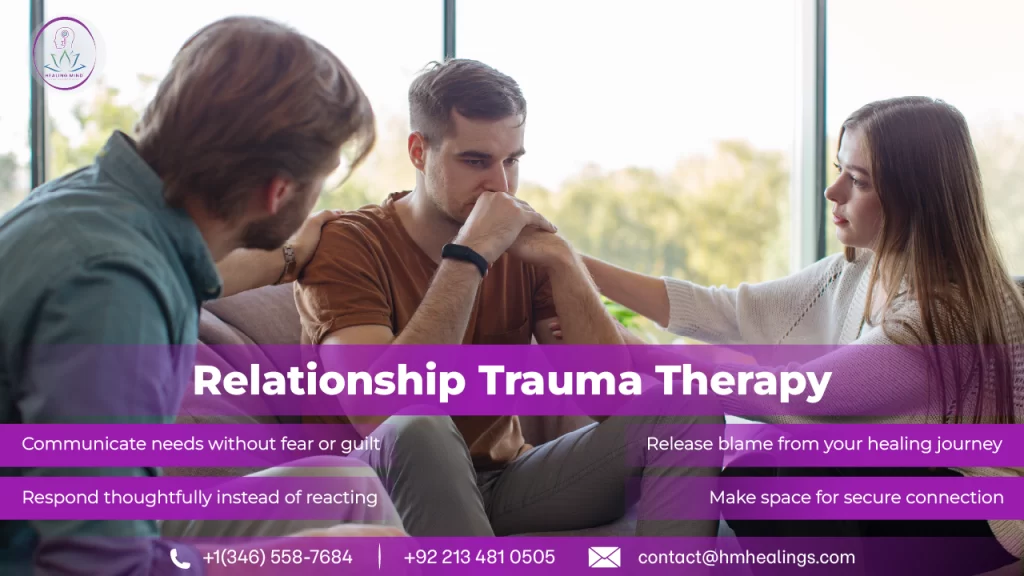
Relationship Trauma Therapy

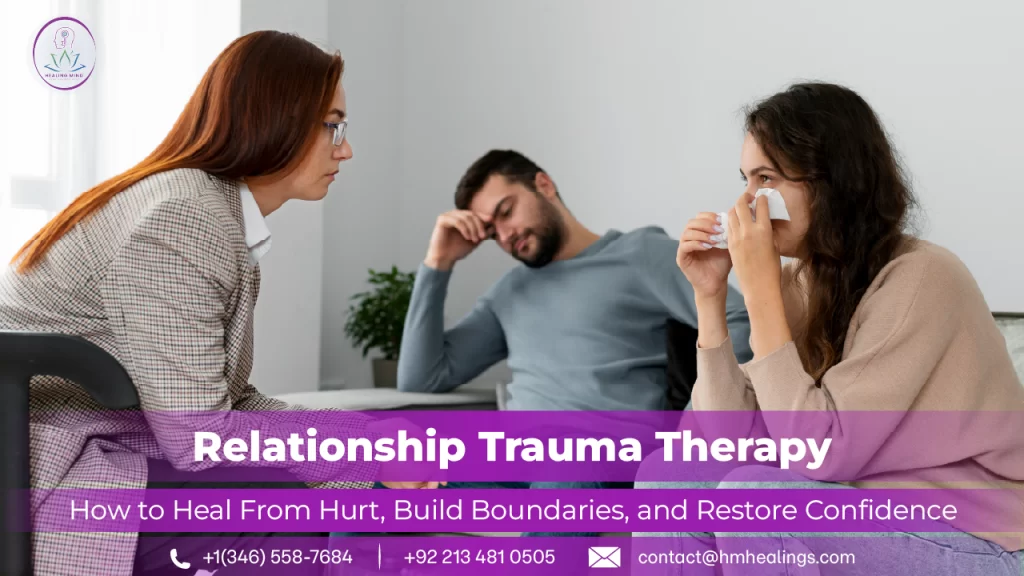
Relationship Trauma Therapy: How to Heal From Hurt, Build Boundaries, and Restore Confidence

Share: 

Trust feels hard to rebuild after a painful relationship. You flinch at small conflicts and question your own worth. Sleepless nights and racing thoughts often follow deep emotional pain. Many people carry these wounds silently, thinking they should just move on. 

Relationship Trauma Therapy offers a real path toward healing and calm. It helps you understand your reactions rather than fear them. You learn to set boundaries without guilt or fear. Slowly, safety returns to your body and mind. 

HM Healings supports you through this process with care. Healing starts with one small, brave step forward.

Signs you may need relationship trauma therapy

Certain warning signs suggest you might benefit from deeper support. Your body and mind often send subtle signals before words come. Small, everyday moments can suddenly trigger big and confusing reactions. 

Recognizing these patterns early builds clarity, comfort, and lasting self-compassion. The next explain 3 common sign categories in detail.

Emotional and cognitive signs

Painful relationships often shape how you view yourself and others. Your attachment style may shift toward anxious or avoidant patterns. Emotional safety starts feeling unfamiliar, while self-worth quietly fades.

  • Trust feels difficult, even with kind and caring people.
  • Small comments can spark shame or deep self-doubt.
  • You often feel unworthy of real love and respect.
  • Closeness feels risky, so you keep people at a distance.

Physical and nervous system signs

Trauma leaves a mark inside your body, not just in memory. Nervous system dysregulation can trigger a constant fight-or-flight response. Your muscles stay tense, and rest feels impossible some nights.

  • Sudden panic or a racing heartbeat during minor disagreements.
  • Feeling frozen or numb the moment conflict starts.
  • Chronic fatigue, tension, or trouble sleeping at night.
  • Jumping at loud sounds or sudden movements nearby.

Behavioral and relational signs

Old habits often resurface within new relationships without warning. Codependency and self-abandonment can quietly repeat familiar relational patterns. Seeking therapy for relationship issues helps break these tiring cycles.

  • Struggling to say no, even when you feel overwhelmed.
  • Pulling away just when a relationship starts feeling close.
  • Repeating the same painful relationship patterns again and again.
  • Feeling responsible for keeping everyone else happy and calm.

What causes relationship trauma

Betrayal trauma often begins with broken promises and constant lies. Emotional neglect and gaslighting can slowly erode a person’s confidence. Chronic inconsistency leaves partners guessing what mood awaits them next. 

Sometimes pain comes from this relationship, other times from an earlier one carried forward. Seeking therapy for unhealthy relationship patterns helps you clearly identify the real source. Understanding these root causes is the first step toward genuine healing.

How the nervous system holds onto relationship trauma

Deep emotional pain often settles inside the autonomic nervous system. Complex trauma can quietly disrupt emotional regulation long after a relationship ends. These reactions reflect real, protective survival responses, not personal weakness. 

Many adults carry these responses without ever realizing the true cause. Freezing, flinching, or shutting down are natural responses, not failures. This understanding brings comfort, not shame or judgment.

Emotional abuse recovery: Rebuilding trust after trauma

Healing from harm means naming pain honestly, without shame or denial. Emotional abuse recovery therapy helps you grieve what happened safely. Grief often includes anger, sadness, and quiet confusion, and that’s okay. 

Rebuilding trust after trauma starts small, through gentle, low-risk moments. Self-trust grows slowly as you honor your own needs again. Each small step marks real progress on your healing journey.

Relationship anxiety and boundaries: learning to feel safe again

Relationship anxiety therapy addresses racing thoughts and constant worry about rejection. Fear of vulnerability often keeps people distant, even in loving relationships. Setting healthy boundaries, therapy teaches simple phrases like calmly saying no. 

Small boundaries protect your peace without guilt or lasting conflict. Over time, these skills build calmer, more secure relationships. Safety becomes possible again, one honest boundary at a time.

You don't have to untangle this alone

Learning to trust again takes real courage, patience, and steady support. You shouldn’t have to figure out boundaries or safety on your own. HM Healings walks beside you at your own pace.

Evidence-based approaches used in relationship trauma therapy

Effective relationship trauma therapy often blends several evidence-based approaches. EMDR helps process painful memories without becoming overwhelmed again. Somatic Experiencing builds somatic awareness and releases trauma stored in the body. 

Internal Family Systems teaches gentle grounding techniques for inner conflict. Trauma-informed couples therapy adds psychoeducation, helping partners understand each other’s reactions. Every approach centers on safety, patience, and steady, lasting progress.

What to expect in relationship trauma therapy sessions

Sessions typically begin with a gentle, judgment-free assessment of your history. Your therapist listens closely before addressing anything deeply painful or triggering. Safety and stability come first, long before tougher conversations begin. 

Pacing matters more than speed, so nothing feels rushed or forced. Deeper work unfolds gradually, only when you feel truly ready. This process respects your timeline, not a fixed schedule.

How to choose the right relationship trauma therapist

Choosing the right support matters as much as starting therapy itself. Look for a therapist who explicitly uses trauma-informed methods and language. A licensed clinician should explain their process clearly, without confusing medical terms. 

Ask whether they assess each partner individually before joint sessions begin. A credentialed therapist creates a space where you feel respected, not rushed. The right fit makes healing feel possible, not overwhelming.

Relationship Trauma Therapy: Heal the Hurt, Reclaim Yourself

Why choose HM Healings

HM Healings understands how deeply relationship pain can linger. Our licensed therapists specialize in trauma-informed, evidence-based approaches for lasting change. We create a calm, judgment-free space where healing unfolds naturally. 

Every session honors your pace, history, and personal comfort level. Compassion and clinical skill guide every step of your journey. Real change happens when you feel truly seen and supported.

  • Licensed, trauma-informed therapists with real clinical experience.
  • Personalized treatment plans built around your unique story.
  • A safe, confidential space free from judgment or pressure.
  • Flexible scheduling, including online sessions across your state.
  • A genuine commitment to your long-term emotional wellbeing.

Ready to feel like yourself in your relationships again?

Reach out today and take the first confident step toward calm, trust, and real connection.

Conclusion

Recovery after painful relationships takes time, courage, and genuine support. You deserve calm, trust, and connections that feel safe again. Relationship Trauma Therapy offers real tools, not empty promises or quick fixes. 

Small, steady steps lead toward lasting change and renewed confidence. You don’t have to walk this path alone anymore.

Frequently Asked Questions

Is relationship trauma a real diagnosis?

Relationship trauma isn't an official diagnosis, but it's a recognized psychological experience. Many therapists treat it using PTSD and complex trauma frameworks.

How long does relationship trauma therapy take?

Recovery timelines vary widely between individuals and relationships. Many people notice meaningful progress within 3 to 6 months of consistent therapy.

Can you heal from relationship trauma without therapy?

Some healing happens through self-reflection, journaling, and supportive relationships. However, professional therapy speeds recovery and prevents patterns from repeating unnoticed.

What's the difference between relationship trauma therapy and regular couples counseling?

Regular counseling focuses on communication and conflict resolution skills. Relationship trauma therapy addresses nervous system responses, safety, and past emotional wounds.

How much does relationship trauma therapy cost?

Costs vary by location, therapist experience, and session length. Many practices offer sliding-scale fees or free initial consultations to help you start.

Relationship Trauma Therapy
Blog

Relationship Trauma Therapy: How to Heal From Hurt, Build Boundaries, and Restore Confidence

Trust feels hard to rebuild after a painful relationship. You flinch at small conflicts and question your own worth. Sleepless nights and racing thoughts often follow deep emotional pain. Many people carry these wounds silently, thinking they should just move on.  Relationship Trauma Therapy offers a real path toward healing and calm. It helps you understand your reactions rather than fear them. You learn to set boundaries without guilt or fear. Slowly, safety returns to your body and mind.  HM

PTSD Counseling Services: Start Your Healing Journey With Professional Support
Blog

PTSD Counseling Services: Start Your Healing Journey With Professional Support

Living with PTSD can turn ordinary days into an exhausting, unpredictable struggle. Flashbacks return without warning, and sleep often feels impossible at night. Simple tasks start to feel overwhelming, and quiet isolation grows deeper each week.  Reaching out for support can feel scary, yet healing is truly possible. Professional PTSD counseling services offer a safe, guided path toward calm and stability. Licensed therapists help trauma survivors process painful memories without judgment or pressure.  They also teach practical tools for handling triggers, anxiety,

Self Esteem Counseling: Build Confidence and Reclaim Your Self-Worth
Blog

Self Esteem Counseling: Build Confidence and Reclaim Your Self-Worth

Do you feel like you are never good enough, no matter how hard you try? Low self-worth can quietly control your thoughts, choices, and relationships. Many people struggle for years before they ask for help. Self-esteem counseling offers a real path forward, not just quick tips or empty affirmations.  A trained therapist helps you understand where these feelings started. Together, you learn to challenge harsh self-judgment and build genuine confidence. Healing takes time, but real change is always possible with the right

Looking for the Right Care? Submit Your Details – We’re Here to Help!– Contact Us Today!

Scroll to Top

The Silva Method

Overview

The Silva Method, a brainchild of Jose Silva, is a comprehensive personal development program aimed at unlocking the hidden potential of the human mind. It has garnered significant attention and endorsements from various experts and institutions worldwide. Read More

Imagination is your mind's superpower.

Core Principles

  • Physical health and well-being.
  • Alpha and Theta States: Achieving these brainwave states is crucial for relaxation, healing, and increased creativity.
  • Desire-Belief-Expectancy (DBE): Conditioning the mind for these three outcomes is essential for goal achievement.
  • Positive Programming: Reframing negative thought patterns to align with desired outcomes.

Benefits

  • Reduced stress and improved relaxation
  • Enhanced creativity and problem-solving abilities
  • Boosted immune function
  • Potential for personal healing and transformation
  • Increased focus and concentration

Scientific Backing

The Silva Method has been subject to research by various institutions including Duke University, Trinity University, and the Simonton Research Institute. Studies have shown positive outcomes in areas such as stress reduction and immune function.