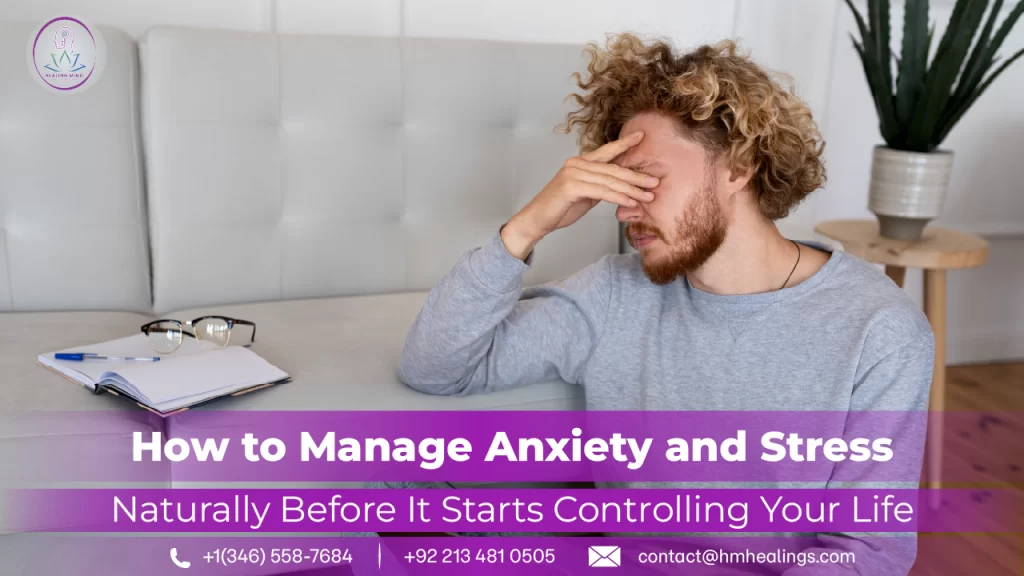
How to Manage Anxiety and Stress Naturally Before It Starts Controlling Your Life

How to Manage Anxiety and Stress Naturally Before It Starts Controlling Your Life

Share: 

Your chest tightens before a meeting. Your mind won’t switch off at 2 a.m., replaying things you can’t fix tonight. If that sounds familiar, you’re not broken, and you’re not alone. Learning how to manage anxiety and stress naturally starts with understanding what your body is doing, not fighting against it. 

Small, steady habits often calm a racing mind faster than people expect. What triggers that overwhelmed feeling, quick ways to settle down in the moment, and daily changes that build lasting calm, all checked for clinical accuracy, come next.

What's Actually Happening in Your Body When Anxiety Takes Over

Something shifts inside you before you even notice it. Your brain interprets a stressful moment as a threat and triggers the fight-or-flight response. Adrenal glands release cortisol, flooding your system and speeding up your heart rate. 

Muscles tighten, breathing turns shallow, and focus narrows to the threat alone. This reaction protects you in short bursts, then fades once the danger passes. But when it lingers for weeks, it wears down the body’s calming switch, the parasympathetic nervous system. 

Left unchecked, chronic stress raises real risks, including heart disease, anxiety disorders, and depression.

Signs Stress Is Starting to Control Your Life

Stress rarely announces itself all at once. It creeps in quietly, then takes over. Watch for these warning signs:

  • Trouble falling or staying asleep
  • Constant worry that won’t quiet down
  • Snapping at people you love
  • Headaches, stomach aches, or unexplained fatigue
  • Leaning on food, alcohol, or scrolling as a coping mechanism
  • Work-life balance slipping out of your hands

Left ignored, these signs often build toward burnout or trigger a sudden panic attack. Catching them early makes recovery faster and much easier.

How to Reduce Anxiety Quickly: Fast Relief Techniques You Can Use Right Now

Panic doesn’t wait for a good moment to strike. Your body can shift from high alert to calm within minutes, once you know the right moves. These 5 techniques work almost anywhere, whether you are stuck in traffic, sitting in a meeting, or lying awake at night unable to relax yet.

  • Diaphragmatic breathing: inhale deep into your belly, hold briefly, exhale slowly
  • Box breathing: inhale, hold, exhale, and pause for four counts each
  • 5-4-3-2-1 grounding technique: name 5 things you see, 4 you hear, 3 you touch
  • Guided imagery: picture a calm, safe place in vivid detail
  • Progressive muscle relaxation: tense, then release, each muscle group slowly

Each one activates that same calming response covered earlier. Your body eases out of high alert within minutes.

Natural Ways to Reduce Anxiety: Daily Habits That Build Long-Term Resilience

Long-term calm rarely comes from one big fix. It builds through small, steady stress management techniques repeated daily until they become second nature. These habits work slowly on your nervous system, lowering how often stress gets triggered up front. Movement, nutrition, and connection matter most, each playing a role.

Move and Rest

Regular aerobic exercise trains your body to release fewer stress hormones over time. Good sleep hygiene keeps that system balanced too. Yoga and tai chi combine gentle movement with breath control, lowering tension while building strength, flexibility, and a calmer baseline mood.

Nourish and Regulate

Magnesium and B vitamins support your body’s natural stress response, so a balanced diet matters more than people realize. Cutting back on caffeine intake helps too, since too much often worsens jitters. Less screen time, plus real time in nature or green space, settles an overstimulated mind.

Connect and Process

Daily mindfulness or short meditation sessions quiet racing thoughts fast. Journaling gives feelings somewhere to go instead of building up inside. Strong social support and clear boundaries protect your energy, while affection from a pet, thanks to oxytocin, softens stress in gentle, physical ways.

Many of these habits reflect the principles of cognitive behavioral therapy and mindfulness-based cognitive therapy, two approaches therapists use to help people manage anxiety long-term.

When Natural Techniques Aren't Enough

Breathing exercises and better sleep help most days, but not always. Some anxiety runs deeper than daily habits can reach on their own. If worry still controls your thoughts after weeks of trying, that’s not failure; it’s simply a sign your mind needs more support. 

Working with a licensed therapist or mental health counselor often uncovers what’s really driving the stress underneath. Therapy for anxiety and stress gives you tools self-help alone can’t always provide, especially when the weight feels constant.

You Don't Have to Carry This Alone

A licensed counselor at HM Healings can help you understand what’s really going on and build a plan that fits your actual life.

Why Professional Support Makes the Difference

Talking to someone trained in anxiety changes what recovery looks like. Sessions built around real therapeutic approaches, like CBT, dig into patterns self-help often misses entirely. 

Many anxiety counseling services now offer flexible scheduling, so support fits easily around your job or family life. Virtual anxiety counseling removes another barrier too, letting you get help from home, without waiting rooms or long drives standing in your way.

How to Manage Anxiety and Stress Naturally: Reclaim Your Calm

Why Choose HM Healings

Finding the right support matters as much as deciding to get help at all. At  HM Healings, care feels personal, not clinical or rushed. 

Our team is led by licensed clinicians who bring a warm, judgment-free approach to anxiety and stress counseling across the USA. Learning how to manage anxiety and stress naturally starts with the right person by your side.

  • Licensed, experienced clinicians who specialize in anxiety and stress
  • Personalized care plans built around your actual life, not a script
  • Flexible virtual sessions for busy schedules or limited local access
  • A compassionate, judgment-free space from your very first session

Ready to Feel Like Yourself Again?

Take the first step toward lasting relief with a free, no-pressure consultation with our clinical team.

Conclusion

Anxiety doesn’t have to run your life. Small habits, breathing techniques, and honest self-check-ins go a long way on their own. 

But when stress lingers despite your best efforts, reaching out for help is strength, not weakness. Support exists, healing is possible, and you deserve a calmer, steadier version of your everyday life.

Frequently Asked Questions

How long does it take for natural remedies to reduce anxiety?

Breathing exercises calm you within minutes. Lifestyle changes like diet and exercise usually take a few weeks of steady practice before real change shows.

Can you manage anxiety without medication?

Yes, many people manage mild to moderate anxiety through exercise, breathing techniques, and therapy alone. Severe or persistent anxiety may still need professional medical guidance.

Is it normal to feel anxious every day?

Occasional anxiety is normal and even helpful. Daily anxiety that disrupts sleep, work, or relationships for weeks isn't typical and deserves professional attention.

What foods help reduce anxiety naturally?

Foods rich in magnesium, omega-3s, and B vitamins, like leafy greens, salmon, and nuts, support a calmer nervous system and steadier mood overall.

What's the difference between stress and anxiety disorder?

Stress is a response to a specific pressure and usually fades once that passes. An anxiety disorder involves persistent worry without a clear trigger.

How to Manage Anxiety and Stress Naturally Before It Starts Controlling Your Life
Anxiety

How to Manage Anxiety and Stress Naturally Before It Starts Controlling Your Life

Your chest tightens before a meeting. Your mind won’t switch off at 2 a.m., replaying things you can’t fix tonight. If that sounds familiar, you’re not broken, and you’re not alone. Learning how to manage anxiety and stress naturally starts with understanding what your body is doing, not fighting against it.  Small, steady habits often calm a racing mind faster than people expect. What triggers that overwhelmed feeling, quick ways to settle down in the moment, and daily changes that build lasting

Cognitive Behavioral Therapy: Break Free From Negative Thoughts and Start Healing
Blog

Cognitive Behavioral Therapy: Break Free From Negative Thoughts and Start Healing

Negative thoughts can feel impossible to escape, especially during stressful days. Many people struggle with racing thoughts, self-doubt, and constant worry that never seems to fade. Cognitive behavioral therapy offers a proven way to break this exhausting cycle.  This approach helps you notice unhelpful thinking patterns before they take over your entire day. Instead of feeling stuck, you learn practical tools to respond differently to tough moments. Small shifts in thinking can lead to real, lasting change over time.  You don’t have

Relationship Trauma Therapy
Blog

Relationship Trauma Therapy: How to Heal From Hurt, Build Boundaries, and Restore Confidence

Trust feels hard to rebuild after a painful relationship. You flinch at small conflicts and question your own worth. Sleepless nights and racing thoughts often follow deep emotional pain. Many people carry these wounds silently, thinking they should just move on.  Relationship Trauma Therapy offers a real path toward healing and calm. It helps you understand your reactions rather than fear them. You learn to set boundaries without guilt or fear. Slowly, safety returns to your body and mind.  HM

Scroll to Top

The Silva Method

Overview

The Silva Method, a brainchild of Jose Silva, is a comprehensive personal development program aimed at unlocking the hidden potential of the human mind. It has garnered significant attention and endorsements from various experts and institutions worldwide. Read More

Imagination is your mind's superpower.

Core Principles

  • Physical health and well-being.
  • Alpha and Theta States: Achieving these brainwave states is crucial for relaxation, healing, and increased creativity.
  • Desire-Belief-Expectancy (DBE): Conditioning the mind for these three outcomes is essential for goal achievement.
  • Positive Programming: Reframing negative thought patterns to align with desired outcomes.

Benefits

  • Reduced stress and improved relaxation
  • Enhanced creativity and problem-solving abilities
  • Boosted immune function
  • Potential for personal healing and transformation
  • Increased focus and concentration

Scientific Backing

The Silva Method has been subject to research by various institutions including Duke University, Trinity University, and the Simonton Research Institute. Studies have shown positive outcomes in areas such as stress reduction and immune function.